
Couch cushions are one of the most used surfaces in any home, office, waiting room, hotel, rental property, or commercial space. They collect dust, sweat, food crumbs, drink spills, pet marks, body oils, makeup, ink, and everyday dirt. Over time, these marks can become stubborn stains that make a couch look old, unhygienic, and uncomfortable.
The good news is that many couch cushion stains can be treated successfully when the right method and the right upholstery cleaning products are used. The mistake many people make is using water, soap, or household cleaners without checking the fabric type first. This can spread the stain, leave water marks, damage colour, or push the stain deeper into the cushion.
This complete guide explains how to remove stubborn stains from couch cushions safely and effectively. It is written for homeowners, renters, Airbnb hosts, office managers, car detailers, cleaning businesses, and professional upholstery cleaners who want better results without damaging fabric.
CleanCare Australia offers a wide range of cleaning products, chemicals, machines, and accessories for carpet and upholstery care. Their range includes upholstery detergents, shampoos, pre-sprays, spotters, protectors, and professional cleaning equipment suitable for homes, commercial spaces, and professional cleaners.
Why Couch Cushion Stains Need the Right Cleaning Method
Couch cushions are different from hard surfaces. Fabric absorbs spills quickly, and the stain can move below the surface before it is visible. A coffee spill, for example, may sit on top of the fabric at first, but within minutes it can soak into the foam underneath. If it is not treated correctly, the smell and discolouration may return even after cleaning.
Using the wrong product can also make the problem worse. Strong chemicals may weaken fabric fibres, while too much moisture can cause mould, odour, or shrinkage. This is why it is important to use proper upholstery cleaner detergent instead of random household cleaners.
Professional cleaners usually follow a process: inspect the fabric, identify the stain, test the product, apply the right detergent, extract or blot the area, and allow proper drying. Home users can follow the same basic steps on a smaller scale.
Common Types of Stubborn Couch Cushion Stains
Different stains need different treatment. Before using any cleaning product, identify what caused the mark. This helps you choose the right solution and avoid unnecessary damage.
|
Stain Type |
Common Cause |
Cleaning Difficulty |
Best First Step |
|
Coffee and tea |
Drinks, office use, guests |
Medium |
Blot and treat quickly |
|
Grease and oil |
Food, body oils, cosmetics |
High |
Use suitable detergent |
|
Pet stains |
Urine, saliva, dirt |
High |
Use odour-control cleaning |
|
Ink marks |
Pens, markers |
High |
Test before cleaning |
|
Mud and dirt |
Shoes, pets, children |
Medium |
Let dry, vacuum first |
|
Food stains |
Sauces, chocolate, snacks |
Medium to high |
Remove solids gently |
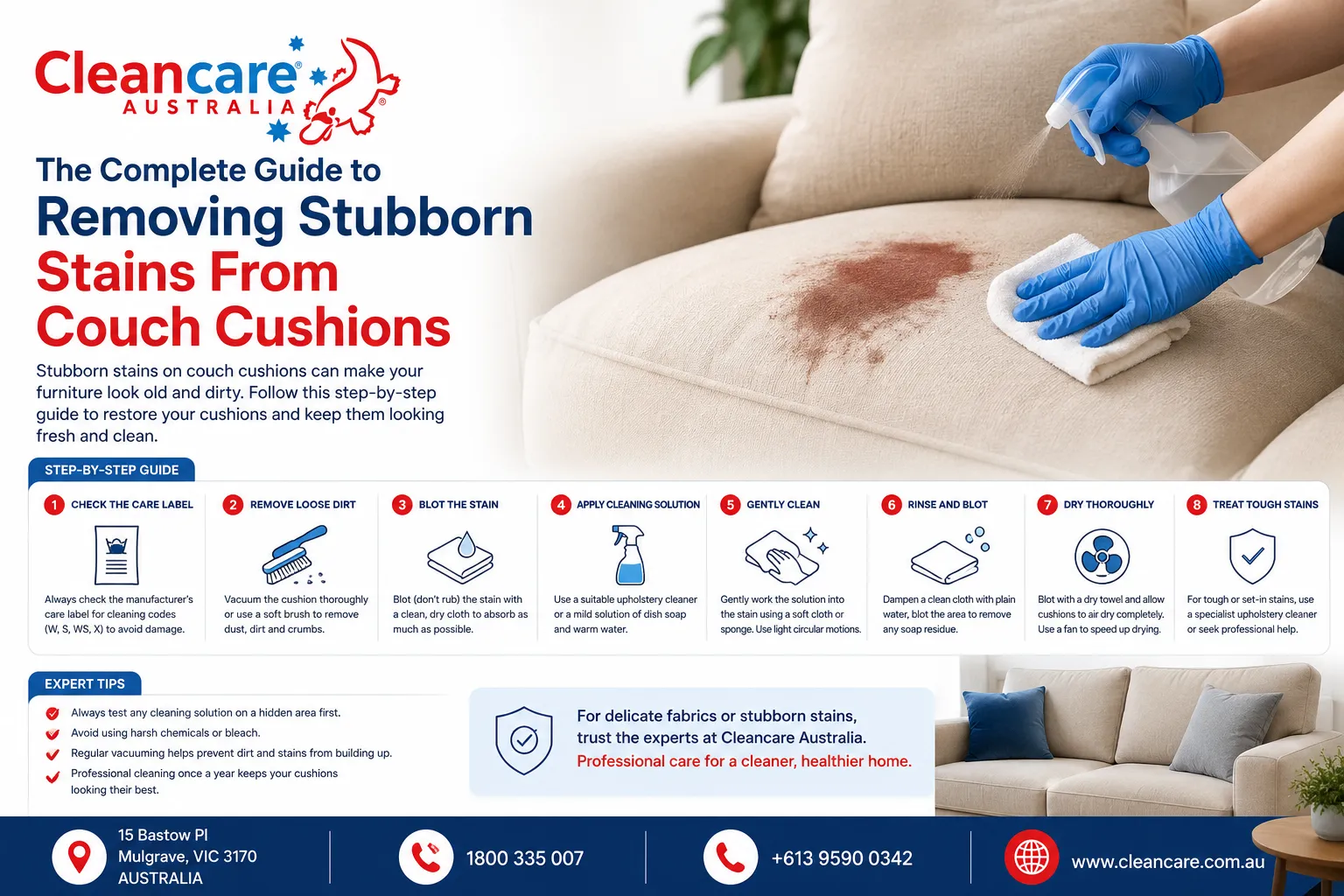
Step 1: Check the Upholstery Care Label
Before cleaning couch cushions, always check the care label. This small label usually tells you whether the fabric can be cleaned with water-based products, solvent-based products, or vacuuming only.
Common fabric cleaning codes include:
-
W means water-based cleaning products may be suitable.
-
S means solvent-based cleaning is recommended.
-
WS means water-based or solvent-based cleaning may be suitable.
-
X means vacuum only, and professional cleaning is usually safer.
This step is important because not every fabric responds well to water. Velvet, suede, silk, linen blends, and delicate designer fabrics may need extra care. If the label is missing or unclear, test a small hidden area before cleaning the visible stain.
Step 2: Remove Loose Dirt Before Applying Any Product
Do not apply detergent directly onto a dirty cushion without removing loose soil first. Dust, crumbs, pet hair, and dry particles can mix with moisture and create a muddy mark.
Start by vacuuming the cushion slowly. Use an upholstery attachment if available. Pay attention to seams, corners, buttons, and creases where dirt collects. If the stain is caused by mud, allow it to dry first, then gently brush and vacuum before applying any liquid cleaner.
This simple step helps your upholstery detergent work more effectively because it can focus on the stain rather than loose surface dirt.
Step 3: Blot, Do Not Scrub
One of the biggest mistakes people make is scrubbing couch stains aggressively. Scrubbing can damage fibres, spread the stain, and create a fuzzy patch on the fabric. Instead, blot the stain gently with a clean white cloth or absorbent towel.
Use light pressure and work from the outside of the stain toward the centre. This helps prevent the mark from spreading. Avoid coloured towels because dye may transfer onto light upholstery.
For fresh spills, blot as much liquid as possible before applying any cleaner. The faster you remove excess moisture, the better your chances of preventing a permanent stain.
Step 4: Choose the Right Upholstery Cleaning Product
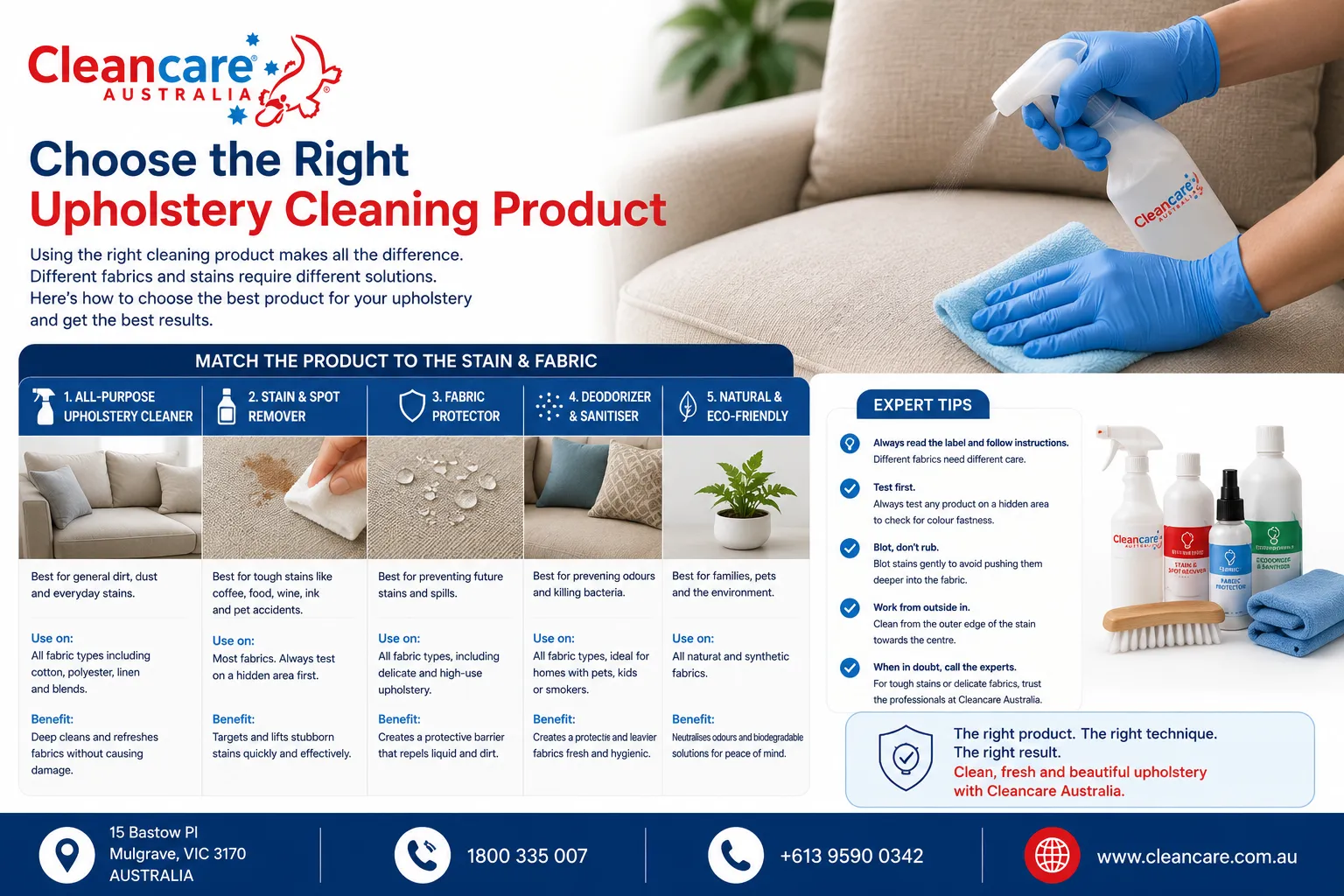
The right product makes a major difference. General soap, dishwashing liquid, bleach, and strong household sprays are not ideal for most couch cushions. They can leave sticky residue, cause colour fading, or attract more dirt later.
Specialised upholstery cleaning products are designed to clean fabric more safely and effectively. Depending on the stain and fabric type, you may need a detergent, shampoo, spotter, pre-spray, deodoriser, or fabric protector.
CleanCare Australia supplies professional cleaning solutions for upholstery, carpet, hard floors, restoration, and commercial cleaning. For couch cushions, their upholstery care range is useful for cleaners and businesses that need reliable products for everyday fabric maintenance and stain treatment.
Benefits of Using Professional Upholstery Products
Professional-grade products are useful because they are made for specific cleaning tasks. They help reduce guesswork and improve results.
Key benefits include:
-
Better stain removal compared with ordinary household cleaners
-
Safer cleaning when used according to directions
-
Reduced risk of sticky residue
-
Improved fabric freshness
-
More consistent results for professional cleaners
-
Suitable options for residential and commercial upholstery care
Step 5: Test Before Full Application
Even when using a quality upholstery cleaner detergent, testing is essential. Apply a small amount of diluted product to a hidden area of the couch, such as the back, underside, or inside seam. Wait a few minutes, then blot with a white cloth.
Check for colour transfer, fading, texture change, or water marks. If the fabric reacts badly, stop and seek professional advice. If the test area looks fine, continue with the stain treatment.
This step is especially important for dark fabrics, patterned cushions, natural fibres, and older furniture.
How to Treat Coffee and Tea Stains on Couch Cushions
Coffee and tea are common couch stains, especially in homes, offices, waiting rooms, and staff areas. These drinks contain tannins that can leave brown marks if not treated quickly.
First, blot the spill with a clean cloth. Avoid rubbing. Then apply a suitable upholstery detergent according to the product instructions. Work gently and avoid soaking the cushion. After treatment, blot with a clean damp cloth to remove residue, then dry with a towel.
For older coffee stains, you may need to repeat the process. Professional cleaners may use a specialised stain remover or extraction machine for deeper cleaning.
How to Remove Grease and Oil Stains
Grease stains are difficult because oil clings to fibres. Common causes include takeaway food, butter, sauces, hair products, body oils, and makeup.
Start by removing any solid residue with a spoon or blunt edge. Do not push the grease deeper into the fabric. Apply a suitable upholstery detergent designed to break down oily soil. Let it dwell for the recommended time, then blot carefully.
Avoid using too much water because grease can spread. If the stain remains, a professional cleaner may need to use stronger products or an upholstery cleaning machine.
How to Handle Pet Stains and Odours
Pet stains need quick action because they can cause both visible marks and unpleasant smells. Urine, saliva, and muddy paws may soak into the cushion and create odour problems if not treated properly.
Blot the area first. Then use an appropriate upholstery cleaning product designed for organic stains and odour control. Do not use hot water on urine stains, as heat may set the odour. Also avoid strong perfumes that only cover the smell temporarily.
For repeated pet accidents, professional cleaning is often the best option because the contamination may have reached the foam inside the cushion.
How to Treat Ink, Makeup, and Dye Marks
Ink, lipstick, mascara, and dye transfer are high-risk stains. They can spread quickly if cleaned incorrectly. Never pour water directly onto ink. Do not scrub.
Test first, then use a product suitable for the stain type and fabric. Apply carefully with a white cloth. Work slowly and avoid over-wetting the area. If the stain is large or on expensive furniture, professional cleaning is strongly recommended.
This is where experienced cleaners and quality upholstery cleaning products become very important.
When to Use an Upholstery Cleaning Machine
For light surface stains, hand cleaning may be enough. However, deeper stains, odours, and heavily used cushions often need machine cleaning. Upholstery cleaning machines help apply solution, agitate gently, and extract dirt and moisture from the fabric.
An upholstery cleaning machine can be useful for:
-
Large couches and sectional sofas
-
Office seating and waiting room chairs
-
Rental property furniture
-
Hospitality and accommodation furniture
-
Car seats and fabric interiors
-
Repeated stains or odour problems
CleanCare Australia supplies cleaning equipment and machines suitable for carpet and upholstery cleaning. This makes it easier for homeowners, cleaning teams, and commercial businesses to find both chemicals and equipment in one place.
CleanCare Australia Product and Service Range for Upholstery Cleaning
CleanCare Australia is a trusted supplier for cleaning chemicals, carpet cleaning products, upholstery care, machines, accessories, restoration products, and commercial cleaning supplies. For anyone dealing with couch cushion stains, their range supports both everyday cleaning and professional stain removal.
|
Product Range |
How It Helps With Couch Cushion Cleaning |
|
Upholstery detergents |
Help remove soil, oils, and general fabric stains |
|
Upholstery shampoos |
Useful for fabric cleaning and refreshing |
|
Spotters and stain removers |
Target specific stains like coffee, food, and grease |
|
Deodorisers |
Help control smells from pets, spills, and daily use |
|
Fabric protectors |
Help reduce future staining and make maintenance easier |
|
Cleaning machines |
Support deeper cleaning and extraction |
|
Brushes and accessories |
Help with controlled agitation and detailed cleaning |
Advantages of Choosing CleanCare Australia
Choosing the right supplier is just as important as choosing the right product. CleanCare Australia provides cleaning solutions for different users, including homeowners, professional cleaners, commercial facilities, restoration teams, car detailers, and property managers.
Why Choose CleanCare Australia?
CleanCare Australia stands out because it offers a broad product range for carpet, upholstery, restoration, and commercial cleaning needs. Instead of buying random products from different places, customers can find detergents, spotters, machines, accessories, and maintenance solutions from one supplier.
Key advantages include:
-
Wide range of carpet and upholstery cleaning products
-
Suitable options for home and professional use
-
Cleaning chemicals for different stain types
-
Equipment and accessories for deeper cleaning
-
Products for commercial cleaners and businesses
-
Australian supplier serving local cleaning needs
-
Practical solutions for regular maintenance and stain control
For professional cleaners, this helps save time and maintain consistent results. For homeowners, it makes it easier to choose products that are made for upholstery rather than using unsuitable household cleaners.
How to Prevent Future Couch Cushion Stains
Stain removal is important, but prevention is even better. Regular maintenance keeps upholstery looking fresh and reduces the chance of permanent marks.
Simple prevention tips include:
-
Vacuum couch cushions weekly
-
Clean spills immediately
-
Avoid eating oily food on fabric sofas
-
Use throws or covers in high-use areas
-
Rotate cushions to reduce uneven wear
-
Apply fabric protector where suitable
-
Schedule professional upholstery cleaning when needed
Using a fabric protector after cleaning can help reduce absorption from future spills. It does not make fabric stain-proof, but it gives you more time to blot spills before they become permanent.
DIY Cleaning vs Professional Upholstery Cleaning
Some stains can be treated at home, especially if they are fresh and mild. However, professional cleaning is better for large stains, delicate fabrics, strong odours, expensive furniture, and repeated marks.
Home cleaning is suitable for:
-
Fresh drink spills
-
Light dirt marks
-
Small food stains
-
Regular maintenance
Professional cleaning is better for:
-
Old stubborn stains
-
Grease and oil marks
-
Pet urine and odours
-
Ink or dye transfer
-
Large sofas
-
Commercial upholstery
-
Delicate or expensive fabrics
Professional cleaners usually have stronger products, better equipment, and more experience with different materials.
Final Thoughts
Removing stubborn stains from couch cushions is easier when you follow the right process. Start by checking the fabric label, removing loose dirt, blotting instead of scrubbing, testing the product, and using a suitable upholstery cleaner detergent. Different stains need different care, so avoid using one general cleaner for every problem.
CleanCare Australia makes upholstery care easier by offering a wide range of cleaning chemicals, detergents, spotters, protectors, machines, and accessories for both home and professional users. Whether you manage a cleaning business, maintain office furniture, clean rental properties, or simply want your family sofa to look fresh again, choosing the right products can save time, protect fabric, and improve cleaning results.
For quality upholstery, carpet, restoration, and commercial cleaning supplies, visit CleanCare Australia and explore their product range for reliable cleaning solutions.
